
Lift Cycles & Application Demands: Using Duty Cycle to Guide Scissor Lift Design


Industrial Lift Duty Cycle — The Design Factor That Determines Long-Term Performance
A lift that meets your load capacity and travel requirements on paper can still fail in the field — and when it does, the culprit is often duty cycle. It’s one of the most frequently overlooked industrial lift design considerations, and one of the most important. Overlook it during specification, and you’re setting yourself up for premature wear, unexpected downtime, and equipment that falls short of its expected service life.
Industrial lift duty cycle isn’t just a spec line item — it’s the factor that determines whether a lift can sustain real-world operating demands without overheating, component fatigue, or performance degradation. Load capacity and vertical travel get most of the attention. Still, duty cycle is what separates a lift that holds up over years of demanding use from one that becomes a maintenance liability.
This article covers what engineers and operations teams need to understand when specifying lifting equipment for industrial environments:
- Why lifts that meet capacity requirements still fail in the field — and what duty cycle has to do with it
- What duty cycle really means and why it’s not a one-size-fits-all metric
- How duty cycle affects heat buildup, motor stress, control reliability, and throughput
- When hydraulic lift systems are the right choice for your application
- The most common problems caused by underestimating duty cycle requirements
- The key factors that determine duty cycle requirements in demanding industrial applications
- What it takes to design and specify lifts that hold up under higher duty cycle demands
- How early design consideration leads to safer, more reliable, and lower-cost lifting systems
- How Autoquip’s field-proven experience translates into lift solutions built for real-world demands
The right lift starts with a conversation with our team of experts. Contact us today to discuss your duty cycle requirements and ensure your lift is designed for the demands of your operation.
Why Meeting Load Capacity Isn’t Enough — The Role Duty Cycle Plays in Lift Performance
When engineers and operations teams specify industrial lifting equipment, load capacity and vertical travel tend to dominate the conversation. Those are important parameters — but they don’t tell the whole story. A lift rated for your load and travel distance can still be fundamentally wrong for your application if it isn’t designed for the frequency at which your operation actually runs it.
Industrial lift duty cycle defines how often a lift can operate within a given time period without generating excessive heat, overstressing components, or degrading performance. It’s one of the most common reasons we see lifts underperform, require early maintenance, or fail ahead of their expected service life — and it’s almost always traced back to a specification decision made early in the project. Getting it right means understanding not just how much a lift needs to carry, but how hard it needs to work.
What Duty Cycle Really Means — and Why It’s Not a One-Size-Fits-All Metric
Duty cycle is a motor rating that defines how long a lift can operate continuously before it needs to rest — and it’s the baseline that determines whether a standard lift can handle the demands of your application. Autoquip’s standard lifts are designed for intermittent duty cycles. Applications requiring reduced rest time or continuous operation need to be evaluated for high cycle or continuous cycle design. It’s also important to note the distinction between duty cycle and lift cycle. Duty cycle is the rating of the motor. A lift cycle is the period of time between when the motor starts.
Cycle Frequency vs. Load
Load capacity and cycle frequency are related but distinct variables. Two lifts carrying identical loads can have completely different duty cycle requirements depending on how often they cycle, how far they travel per cycle, and what the environment demands of the drive system. A heavy-duty lift running infrequent cycles may place less cumulative stress on its components than a lighter lift running continuous high-frequency cycles. Both load weight and repetition rate contribute to heat generation, component wear, and system fatigue — and we see it regularly when teams evaluate them in isolation rather than together as a combined operating profile.
Continuous vs. Intermittent Use
Intermittent duty lifts are designed for applications with defined cycles and adequate rest time between them — manual workstations, maintenance platforms, and similar applications where cycle frequency is moderate and predictable. These two categories represent the most fundamental cycle classifications in industrial lift design — and choosing the wrong one for your application has real consequences.
Continuous duty lifts are engineered for sustained, high-frequency operation — production lines, automated material handling systems, and applications where the lift runs as part of a larger throughput-driven process. Autoquip’s standard scissor lifts are designed to meet 100,000 cycles per year on an intermittent cycle — one full lift cycle per two-minute period, with the motor running two minutes and resting eight. Applications exceeding that threshold require a different lift design and motor selection based on the specific application.
Using an intermittent duty lift in a continuous duty application is one of the fastest ways to shorten equipment life. Understanding which duty classifications apply to your application is the first step toward selecting equipment that’s actually built for the job.
How Duty Cycles Affect Lift Performance and Reliability
Duty cycle touches nearly every major system in a lift — and when it’s underestimated, the effects show up across the board. Here’s where we most often see it play out.
Heat Buildup in Hydraulic Systems
Heat is one of the primary factors limiting how hard and how often a hydraulic lift can run. Managing hydraulic lift duty cycle in high-cycle applications starts with the system’s thermal design — hydraulic fluid temperature can climb quickly if the system isn’t built to handle the load. Overheated fluid degrades faster, loses viscosity, and accelerates wear on seals, valves, and pump components. Lifts designed for higher duty cycles incorporate larger reservoirs, cooling systems, and heat-tolerant components — standard hydraulic systems typically do not.
Motor and Power Unit Stress
The motor and power unit drive the hydraulic pump on every cycle. In high-frequency applications, these components are under repeated thermal and mechanical stress. Motors not rated for the actual duty cycle will run hot, draw excess current, and wear prematurely. Duty ratings for motors and power units exist for exactly this reason — they define the operating boundaries the equipment was built to sustain. When we size motors and power units for a project, we match them to how the lift will actually be used — not just what it needs to lift.
Control System Reliability
Control systems in high-cycle applications are subject to more switching events and more wear on contactors and relay components than those in low-frequency applications. Controls rated for intermittent use can degrade quickly under continuous or near-continuous demand — and when control reliability suffers, so does everything that depends on it.
Impact on Cycle Time and Throughput
Duty cycle isn’t just about preventing failure — it directly affects throughput. A lift that slows down or requires cool-down periods due to thermal buildup becomes a bottleneck in production or material handling workflows. In automated environments where vertical reciprocating conveyors and scissor lifts are integrated into larger systems, a lift that can’t sustain its rated cycle time under load disrupts the entire operation.
When Hydraulic Lift Systems Are the Right Choice
The hydraulic class of lift systems offer precise, controlled movement, high load capacity, and inherent safety characteristics that make them the right choice for a wide range of applications. But hydraulic lift duty cycle performance is best realized when these systems are matched to the right operating conditions.
Precision Movement and Safety-Sensitive Applications
When an application requires smooth, controlled positioning — particularly where personnel are working on or near the platform — hydraulic systems deliver the kind of stable, predictable movement that other technologies can’t always match.
Heavy-Duty and Oversized Loads
For heavy or oversized loads, the force multiplication inherent in hydraulic actuation handles lifting requirements that would challenge other drive technologies. When load capacity and structural integrity are the priority, hydraulic systems are typically the right starting point.
Applications That Don’t Require Extremely High Cycle Speeds
Hydraulic systems are well-suited for applications where cycle frequency is moderate rather than continuous. When throughput demands don’t require extremely high cycle speeds, hydraulic systems deliver reliable performance without the complexity of other high-cycle drive technologies.
Large Custom Work Platforms
Maintenance stands, assembly lifts, pit-mounted lifts, and similar large custom platforms are a natural fit for hydraulic systems. These applications prioritize load capacity, structural integrity, and controlled movement — all areas where hydraulic systems excel.
The Real Cost of Underestimating Duty Cycle
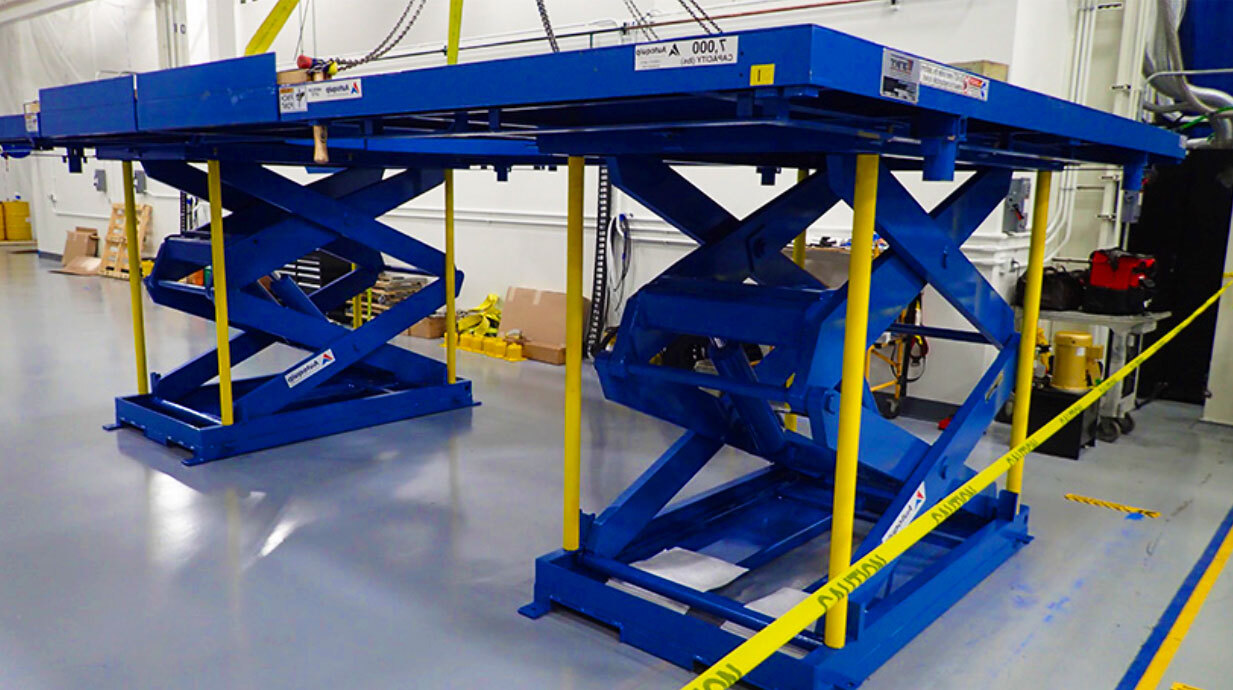
Underestimating duty cycle requirements doesn’t always show up immediately. Components may perform adequately at first, with degradation accelerating as cumulative operating time builds. By the time the consequences become visible, the damage is already done.
Premature Component Wear
Components operating beyond their duty cycle rating wear faster — seals, bearings, hydraulic pumps, and motors all have operating limits defined by heat generation and load repetition. When those limits are regularly exceeded, service life shortens dramatically, and planned maintenance intervals become unplanned failures.
Unexpected Downtime
In production and material handling environments, unplanned lift downtime doesn’t just affect the lift — it affects everything downstream. A failed lift in an integrated system can shut down an entire line. The cost of that downtime — lost production, emergency service calls, expedited parts — almost always exceeds the cost difference between a correctly specified lift and one that was under-engineered for the application.
Increased Maintenance Costs
Lifts running beyond their duty cycle ratings require more frequent maintenance and more component replacements over their service life. These costs accumulate quietly, often attributed to normal wear rather than traced back to the original specification. Over a five- or ten-year horizon, the difference between a correctly specified lift and an under-engineered one can be substantial.
Safety Risks from Degraded Performance
Performance degradation isn’t just a reliability issue — it’s a safety issue. Hydraulic systems running hot can exhibit inconsistent movement or pressure loss. Control systems under thermal stress can behave unpredictably. A correct duty cycle specification is as much a safety consideration as an engineering one.
Key Factors That Drive Duty Cycle Requirements
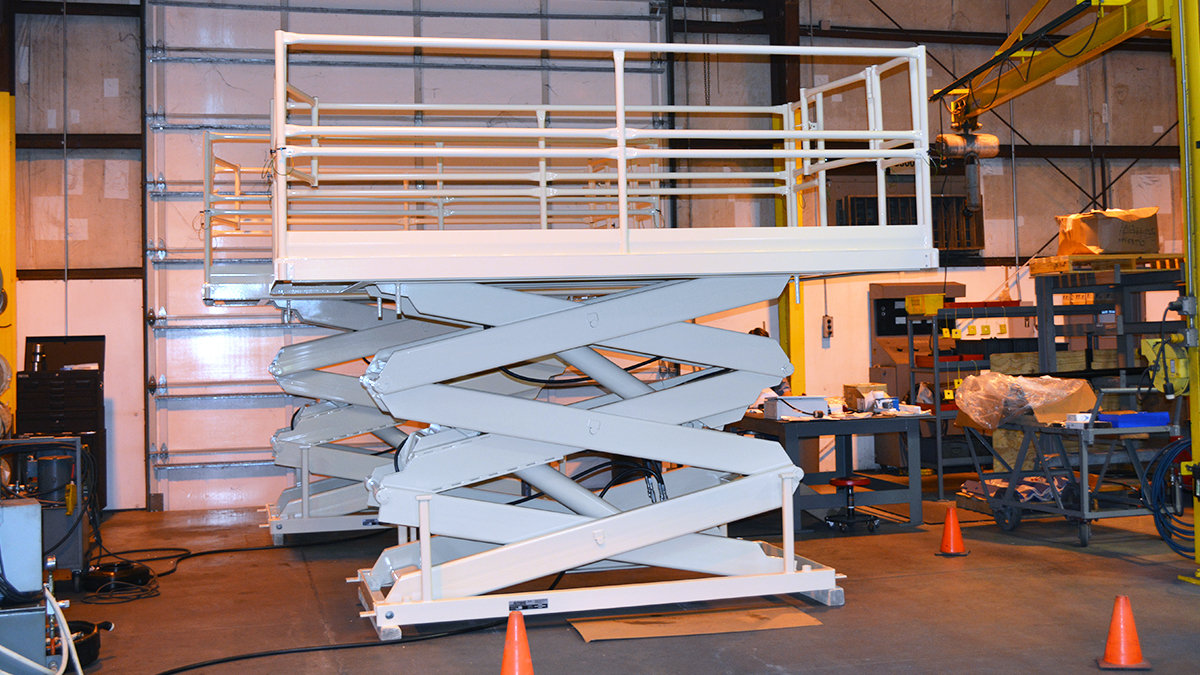
Industrial lift duty cycle requirements don’t come from a single variable — they’re the product of several factors working together. When our team evaluates an application, we look at all of them, because getting one wrong can throw off the whole picture. These factors directly affect system longevity, long-term uptime, and reliability.
Load Weight and Distribution
Heavier loads generate more heat per cycle and place greater stress on structural and hydraulic components. Off-center or asymmetric loads introduce additional stress, affecting wear patterns and cycle capacity. Both need to be accurately characterized before duty cycle requirements can be determined.
Lift Travel Distance and Cycle Frequency
Longer travel distances mean longer operating times per cycle, which increases heat generation and motor run time. Running time per cycle is one of the most direct contributors to thermal load accumulation. Higher cycle frequency compounds this effect. These variables have to be evaluated together — not separately.
Environmental Conditions
Ambient temperature, humidity, and exposure to contaminants all affect duty cycle performance. A lift operating in a hot environment starts every cycle with less thermal headroom. Dusty or corrosive conditions accelerate wear on seals and exposed components. These factors have to be part of the specification conversation from the start.
Designing and Specifying Lifts for Higher Duty Cycle Demands
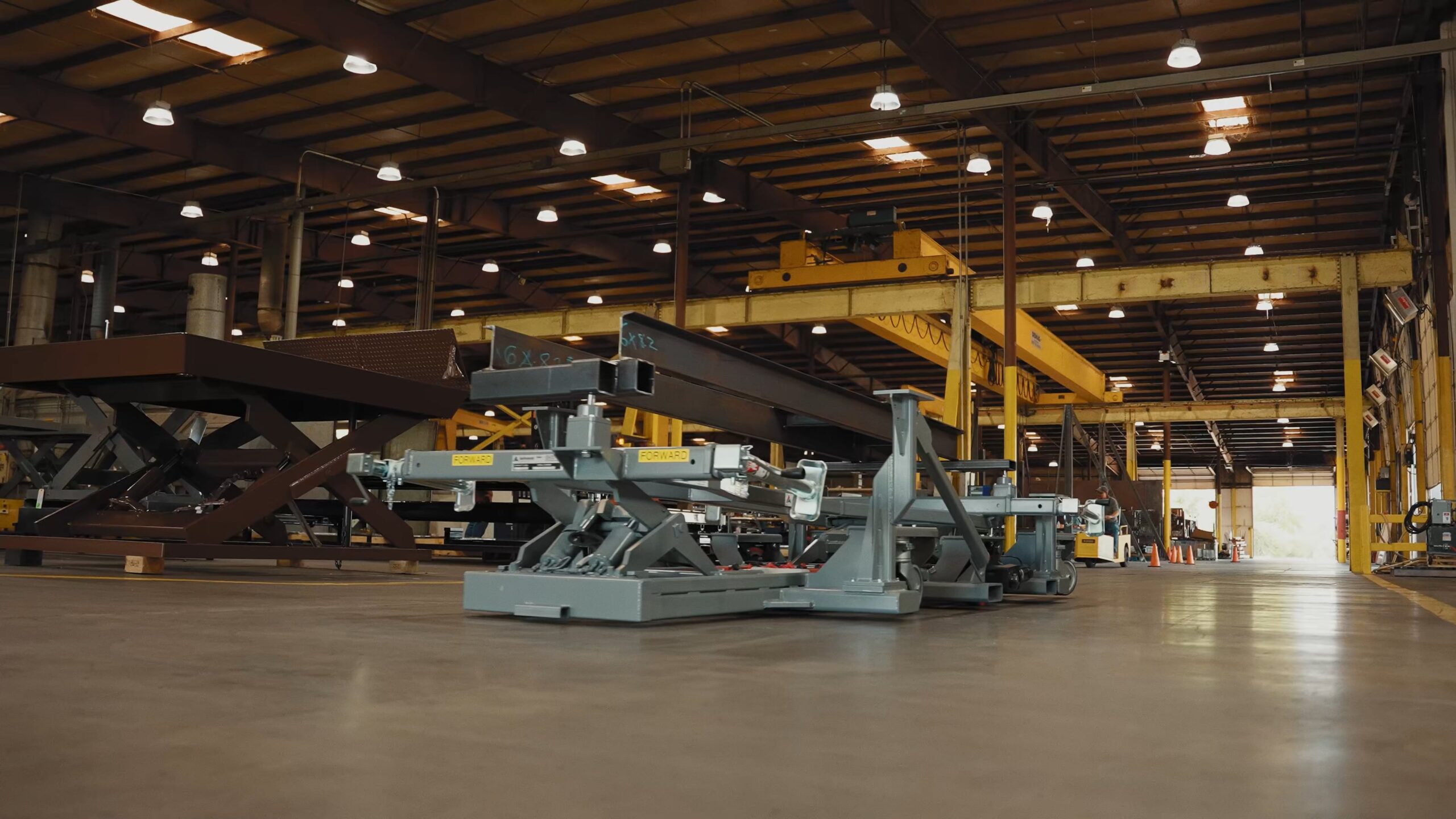
When standard lift configurations fall short of an application’s duty cycle requirements, the answer is equipment built for the job — not a standard product pushed beyond its limits. High-cycle and heavy-duty applications require a different approach to component selection, thermal management, and system design.
For heavy-duty and high-cycle lifts, that means oversized hydraulic reservoirs for better heat dissipation, motors and power units rated for continuous or near-continuous duty, structural components sized for load repetition, and controls matched to actual switching frequency. These aren’t upgrades you add later — they’re decisions that have to be made at the design stage.
It’s the responsibility of the user to notify us whenever an application is likely to demand above normal duty from the lift. Above normal duty typically requires supplemental design features to enhance the serviceable life of the lift and to protect warranty coverage. Autoquip’s approach to custom design options means we build material handling lifts around your application’s real demands — not around what’s easiest to manufacture off the shelf.
Why Duty Cycle Should Be Addressed Early in the Design Process
The most expensive industrial lift duty cycle mistakes are discovered after installation. Retrofitting a lift for a higher duty cycle application is significantly more costly and disruptive than addressing these industrial lift design considerations at the outset. In many cases, the structural envelope of a standard lift simply can’t accommodate the required components — which means replacement, not upgrade. Operating a lift above its rated duty cycle without proper design consideration can also affect warranty coverage — another reason early communication with Autoquip matters.
Early evaluation also supports better lifecycle cost analysis and ROI. A lift correctly designed for its application runs longer between service intervals, requires fewer unplanned repairs, and delivers more consistent performance — all of which translate to lower total cost of ownership. That’s why we encourage customers to bring us in early. When our team is part of the conversation from the start, duty cycle gets treated as the foundational design parameter it is.
Proven in the Field — How Autoquip Approaches Duty Cycle Challenges
Interested in how duty cycle plays out in specific lift applications? We’ve tapped our blog series for a couple of real-world examples — see how high-cycle design requirements shape lift selection in What is a High Cycle (HICY) Scissors Lift? and how the right hydraulic system makes a measurable difference on the plant floor in Discover How Hydraulic Lift Mechanisms Improve Safety and Productivity.
Get the Duty Cycle Specification Right Before It Costs You
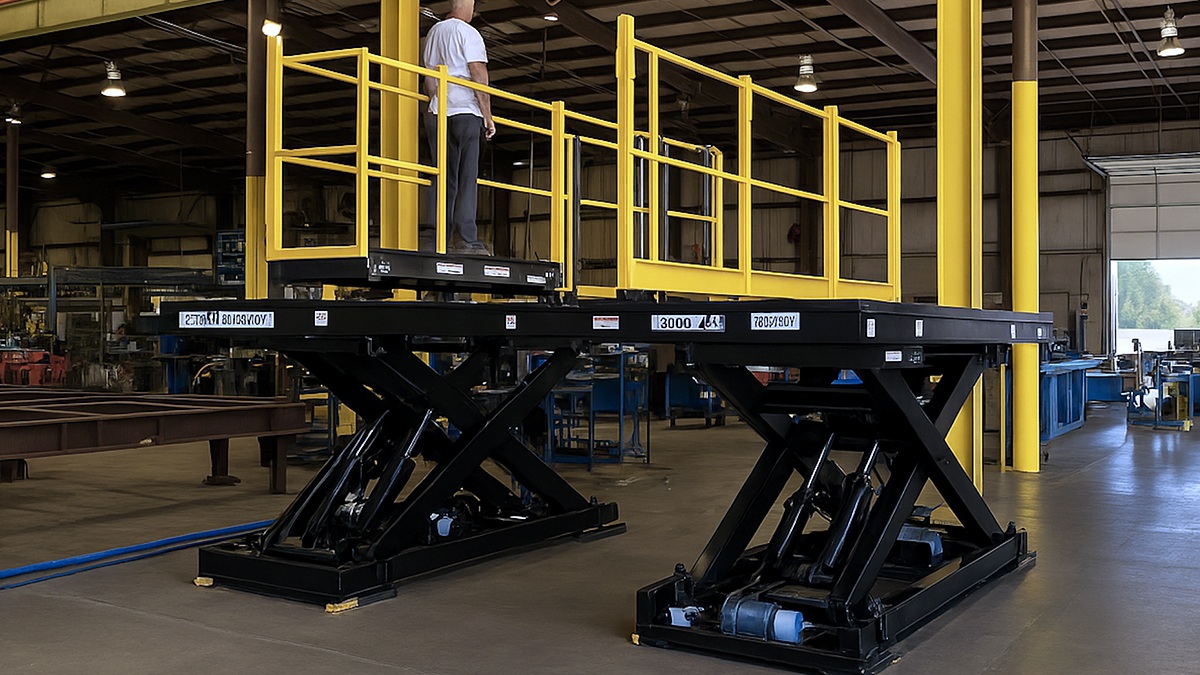
The gap between a lift designed for average conditions and one engineered for the actual operating demand of your application shows up in maintenance costs, downtime, and equipment life — usually sooner than expected. Autoquip has been engineering custom material handling lifts for demanding industrial applications for decades. We understand what it takes to build lifting equipment that holds up — and we work with customers early in the design process to make sure duty cycle is addressed before it becomes a problem.
Don’t leave duty cycle to chance. Reach out to Autoquip, and let’s figure out the right solution for your operation!
Duty Cycle Done Right — That’s the Autoquip Difference
Duty cycle is the design factor that determines whether a lift delivers on its performance promise — not just on day one, but across years of demanding industrial use. A lift that looks right on paper but wasn’t engineered for the frequency and conditions of real-world operation will underperform, require early maintenance, and eventually pose safety risks that a properly specified lift would have prevented. The bottom line: industrial lift duty cycle directly impacts lifespan and uptime. Proper specification prevents failures and unplanned downtime. And addressing it early leads to safer, more reliable systems with lower lifecycle costs. At Autoquip, that’s how we’ve been approaching lift design for decades — and it’s the difference between equipment that holds up and equipment that doesn’t.
Your operation has specific demands — your lift should too. Contact Autoquip to talk through the details and request your free quote.