
Designing High-Capacity Lifts for Industrial Material Handling Applications
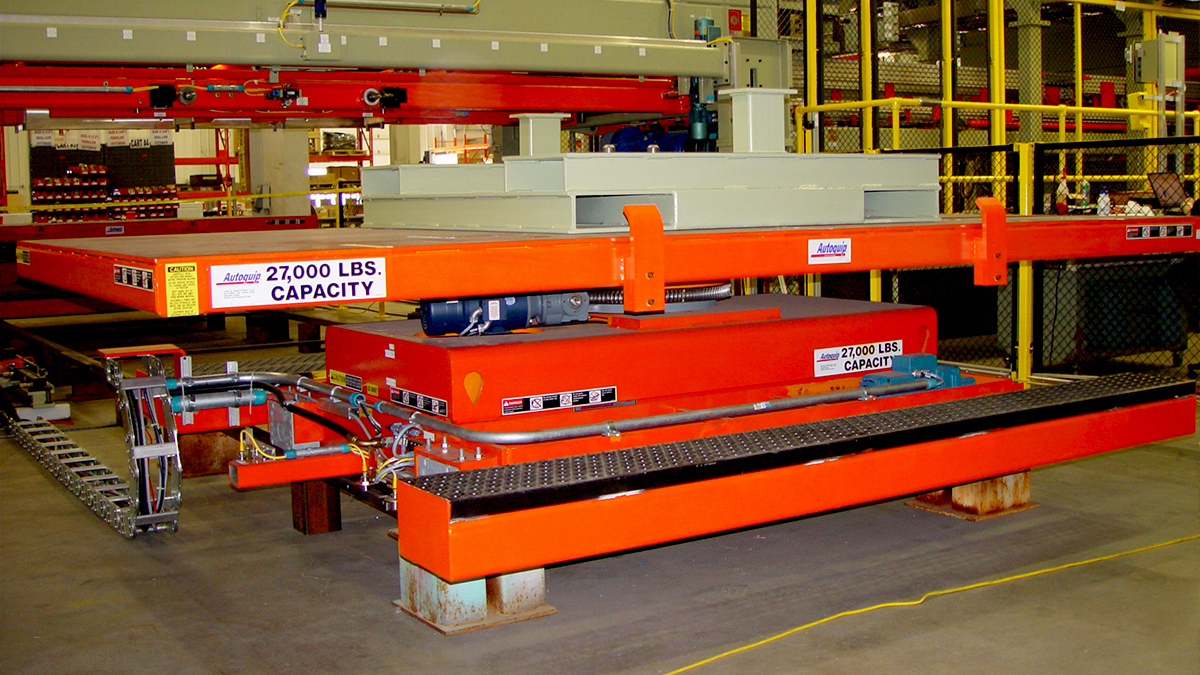


Engineering High-Capacity Lifts That Transform Industrial Material Handling
Are your material handling operations struggling with the challenge of safely moving multi-ton equipment between production levels? When standard lifting equipment can’t handle your facility’s heaviest loads, operational bottlenecks, safety risks, and productivity losses become inevitable realities. The difference between efficient vertical material transport and dangerous, time-consuming workarounds often comes down to having the right high-capacity lift engineered specifically for your application.
In this guide, we’ll explore:
- Why heavy-duty lifting plays a critical role in modern manufacturing operations
- What material handling obstacles standard equipment creates for industrial facilities
- Which engineering considerations ensure optimal capacity, configuration, and safety
- How Autoquip’s custom approach delivers superior reliability and performance
- What measurable benefits impact your bottom line through enhanced safety and efficiency
- Why partnering with Autoquip accelerates your custom lift engineering project
- How properly designed high-capacity lifts give your operations a competitive advantage
Discover how Autoquip’s custom high-capacity lift solutions can optimize your material handling operations—contact us for a free consultation.
The Critical Role of Heavy-Duty Lifting in Modern Manufacturing
Safely and efficiently lifting heavy materials within a facility—whether for assembly, staging, or transferring components to workstations—remains a critical challenge in industrial environments. From large automotive components and heavy machinery parts to palletized materials weighing thousands of pounds, the equipment handling these loads must deliver unwavering reliability. When facilities rely on undersized or inappropriate lifting solutions, they face increased safety risks, workflow interruptions, and unnecessary maintenance burdens that drain valuable resources.
High-capacity lifts engineered for demanding applications solve these challenges by providing robust, safety-focused vertical transport that keeps production moving smoothly. Autoquip’s Titan and flagship Super Titan scissor lifts exemplify this capability, with capacities ranging from 8,000 to 50,000 plus pounds to handle the heaviest industrial loads. These systems integrate seamlessly into existing workflows while meeting stringent safety standards and delivering the reliability that industrial operations demand.
H2: Overcoming the Toughest Material Handling Obstacles
Industrial facilities face distinct challenges when moving or transferring heavy loads, and generic lift solutions rarely address these operational realities effectively.
Safety Risks That Standard Equipment Creates
Manual handling of heavy materials exposes workers to serious injury risks, including crushing hazards, repetitive strain injuries, and accidents from improper lifting techniques. Even powered equipment not designed for specific load requirements can fail catastrophically, endangering personnel. Facilities handling loads exceeding several thousand pounds need lifting systems engineered with robust safety features that eliminate these risks entirely.
Space Limitations and Multi-Level Transfer Requirements
Many manufacturing and warehouse environments operate within tight footprint constraints while still needing to move heavy loads efficiently throughout the facility. When materials must be transferred between floors or to mezzanine levels, Vertical Reciprocating Conveyors (VRCs) offer the appropriate solution—providing the load capacity, platform size, and throughput that standard freight elevators often cannot accommodate. By designing VRCs around the available space and specific operational requirements, facilities can achieve reliable multi-level material movement without costly structural modifications.
When Generic Lift Solutions Fall Short
Off-the-shelf lifting equipment typically accommodates common load ranges and standard platform sizes, but industrial applications frequently demand capabilities beyond these specifications. Facilities handling exceptionally heavy equipment, oversized components, or specialized materials need custom-engineered solutions that account for unique load distributions, environmental conditions, and integration requirements that generic products simply cannot address.
Essential Engineering Considerations for Heavy-Duty Applications
Designing effective high-capacity lifts requires careful attention to multiple technical factors that directly impact safety, performance, and operational efficiency.
Right-Sizing Load Capacity for Maximum Safety and Performance
Accurate load capacity specification forms the foundation of any successful lift design. Engineers must account not only for maximum material weight but also for dynamic loads during lifting operations, potential shock loads, and safety factors to prevent overload. Heavy-duty lifts for industrial environments typically handle capacities ranging from 10,000 to over 100,000 pounds, with custom designs available to accommodate even heavier loads when applications demand it.
Optimizing Platform Configuration for Your Workflow
Platform size and configuration must match actual material dimensions and handling patterns. Single large components require different platform designs than multiple pallets or irregular loads. Engineers evaluate load distribution patterns, positioning requirements, and whether materials arrive on forklifts, carts, or conveyors to create optimal platform configurations. Some applications benefit from specialized features like raised edges, containment systems, or custom deck treatments that secure loads during vertical travel.
Building in Redundant Safety Features That Protect Your Team
Industrial lifting equipment must incorporate multiple safety layers to protect personnel and prevent accidents. Free-fall prevention systems, interlocking mechanisms that prevent operation with gates open, emergency stop functions, and overload protection represent baseline safety requirements. These systems must meet or exceed ANSI MH29.1 standards while providing the reliability industrial operations demand. Properly engineered lifts integrate redundant safety features that continue protecting workers even if individual components fail.
Seamless Integration with Production Workflows
The most effective material handling equipment integrates smoothly into existing production systems rather than forcing workflow modifications. Engineers must consider how materials arrive at and depart from lift platforms, whether conveyor integration is needed, and how automation interfaces with lifting operations. Facilities using automated guided vehicles or robotic systems require lifts designed specifically for these integration points, ensuring consistent cycle times and reliable material transfer.
How Custom Engineering Delivers Superior Material Handling Solutions
Autoquip approaches each custom lift project by thoroughly understanding specific operational requirements, then engineering solutions that address every challenge.
Tailored Design for Unique Applications
Every manufacturing facility operates differently, with distinct material handling patterns, space constraints, and production requirements. Rather than forcing operations to adapt to standard equipment limitations, custom-engineered lifts accommodate specific needs. This approach results in systems optimized for actual workflow patterns, delivering better performance and higher reliability than generic alternatives. Engineers work directly with facility teams to understand load characteristics, cycle time, and power requirements, and operational constraints that influence design decisions.
Proven Heavy-Duty Reliability
Industrial environments demand equipment that operates consistently under demanding conditions. High-capacity lift designs incorporate robust components, proven hydraulic systems, and structural elements engineered for long service life with minimal maintenance. This reliability translates directly into reduced downtime, lower maintenance costs, and the confidence that critical material-handling operations won’t disrupt production schedules. Facilities can depend on these systems to perform reliably shift after shift, year after year.
Real-World Performance Examples
As the following case studies demonstrate, Autoquip’s custom engineering approach has delivered proven results across diverse industrial material handling applications:
- High-Capacity Coil Removal Lift with Hydraulic Shuttle: Advanced integration enables lifting and horizontal material transfer for a seamless workflow in heavy manufacturing operations. Our Super Titan lift was configured with 72 inches of controlled travel to support this hydraulic shuttle system.
- Dual-Ram Lift for Wire and Cable Testing: Extreme precision, combined with heavy load capacity, handles massive test equipment while providing the exact positioning required for accurate testing procedures. This custom solution leverages dual hydraulic cylinders powering a platform that accommodates cable reels weighing 60,000 pounds.
- Double Pantograph Scissor Lifts for Railway Maintenance: Custom engineering solved another unique industry challenge by accommodating specific dimensions and weights of railway components while operating in constrained maintenance facility environments. This custom lift system supports the movement of equipment between the facility’s three working levels.
Measurable Benefits That Impact Your Bottom Line
Investing in properly engineered high-capacity lifts delivers tangible operational improvements that justify project costs through sustained performance advantages.
Enhanced Safety That Protects Your Workforce
Eliminating manual handling of heavy materials removes significant injury risks from daily operations. Workers no longer face crushing hazards, strain injuries, or accidents caused by improper material handling. Automated lifting systems with comprehensive safety features create inherently safer work environments, reducing workers’ compensation claims, lost-time incidents, and the human cost of workplace injuries. This protection represents perhaps the most essential benefit these systems deliver.
Productivity Gains Through Efficient Material Flow
Custom material handling equipment designed for specific workflows eliminates bottlenecks that slow production. Faster cycle times, reliable operation, and seamless integration with existing systems keep materials moving smoothly through manufacturing processes. Facilities report significant productivity improvements when replacing manual processes or inadequate equipment with properly engineered high-capacity lifts. These efficiency gains compound over time, contributing directly to increased output and improved operational metrics.
Operational Flexibility for Evolving Requirements
Well-engineered lifting systems accommodate changing production needs without requiring replacement. Modular designs allow for capacity upgrades, platform modifications, or integration enhancements as operations evolve. This flexibility protects capital investments while ensuring material handling capabilities grow alongside business requirements. Facilities gain the confidence to pursue new opportunities, knowing their infrastructure can adapt.
Return on Investment Through Reduced Total Cost
While custom-engineered high-capacity lifts represent significant capital investments, their total cost of ownership often proves lower than generic alternatives. Reduced maintenance requirements, minimal downtime, longer service life, and improved productivity create compelling financial returns. Facilities typically recover implementation costs within reasonable timeframes through operational improvements, making these projects financially attractive beyond their technical benefits.
Partner with Autoquip for Custom High-Capacity Lift Engineering
For over 70 years, Autoquip has engineered custom lifting solutions that solve the toughest industrial material handling challenges. Our team combines deep technical expertise with practical understanding of how manufacturing facilities operate, ensuring every system we design delivers the performance, safety, and reliability your operations demand. Autoquip delivers exceptional high‑capacity lift solutions, expertly engineered for lifting needs starting at 8,000 lb. and scaling up to 135,000 lb. (and even up to 300,000 lb. for in‑ground ram installations).
Don’t let inadequate material handling equipment limit your operational potential or compromise worker safety. Our engineering team is ready to analyze your specific requirements and design high-capacity lift systems that transform how your facility moves heavy materials.
Autoquip Delivers the Heavy-Duty Lifting Solutions Your Operations Demand
Successfully moving heavy materials in industrial environments requires more than generic lifting equipment—it demands custom-engineered solutions designed specifically for your operational realities. From initial load analysis through final integration, the right engineering approach ensures you get systems that enhance safety, improve productivity, and deliver reliable performance for years to come. Facilities that invest in properly designed, high-capacity lifts gain a competitive advantage through more efficient operations and safer work environments.
Ready to engineer the perfect high-capacity lift solution for your facility? Request a free quote and let our experts design a system that meets your requirements while exceeding your expectations!